St Johns County Clerk of Courts functions as the official county judicial office responsible for maintaining court records, filings, and administrative support within the local legal system. The St Johns county clerk of court operates as a central court administration office that manages civil, criminal, family, and traffic case documentation. This public record authority plays a key role in organizing legal files, supporting courtroom procedures, and assisting judges with accurate case information. As part of the broader judicial support system, the office maintains consistency in recordkeeping and helps keep legal processes structured across the county.
The St Johns Clerk of Courts also provides organized services for court records search and digital record handling through its official court administration system. Users can view case details, filings, and public documents through structured online systems designed for clarity and accuracy. This county judicial office maintains updated legal records that support transparency in court-related matters. The public record authority also manages financial and procedural documents linked to cases, creating a reliable framework for storing and retrieving county legal information in both physical and digital formats.
St Johns County Current Clerk of Courts
The St Johns Clerk of Courts is led by an elected official responsible for court records, legal filings, and county judicial administration services. This office manages case documentation, public records, and supports daily court operations across multiple divisions in St Johns County ensuring efficient access to judicial information and administrative support for residents, legal professionals, and visitors.
Current Clerk Leadership and Role
The St Johns Clerk of Courts operates under the leadership of Brandon J. Patty, who serves as Clerk of the Circuit Court and County Comptroller. He oversees county clerk leadership responsibilities, ensuring smooth coordination between court services and county financial functions. This leadership role supports judicial administration authority across civil, criminal, family, and probate matters. It also maintains consistency in court administration office operations and record handling.
Core responsibilities include:
- Supervising legal filing system for court cases
- Managing case records management across all divisions
- Supporting public records services for eligible documents
- Overseeing clerk of circuit court operations and reporting functions
Jurisdiction and Judicial Administration Authority
The office of the St Johns Clerk of Courts serves St. Johns County, Florida, covering all local court-related administrative services. It works closely with the judicial system to maintain accurate documentation and ensure proper case tracking. This jurisdiction includes support for court hearings, document processing, and official record storage. The office also plays a key role in maintaining county comptroller duties related to financial oversight and auditing of court-related transactions.
Public Contact and Service Access
The clerk’s office provides structured contact options for residents, attorneys, and legal professionals. Services are designed to support both information requests and court-related filings.
Available contact methods include:
- Phone support during official working hours
- Email assistance for different court divisions
- In-person services at the main courthouse office
Administrative Function and Service Scope
The St Johns Clerk of Courts remains central to county judicial operations. It connects court processes with public access needs while maintaining organized recordkeeping systems. Its functions support transparency, accurate documentation, and efficient handling of court and county records.
What is the St Johns County Clerk of Courts?
The clerk office st johns county serves as the main administrative body for court-related services within the county judicial system. It operates as the central support unit for court filings, record handling, and official documentation tied to legal proceedings. This office functions as a judicial administrator, managing essential workflows between courts, attorneys, and the public. It keeps court operations organized by processing documents, tracking cases, and maintaining official records used in legal matters.
Court Clerk Responsibilities in Daily Operations
Court clerk responsibilities cover a wide range of administrative and legal support tasks. The office acts as a record custodian, ensuring all court documents are stored, updated, and retrieved in a structured manner. Each task supports smooth coordination between court divisions and ensures legal processes remain properly documented.
Key responsibilities include:
- Processing civil, criminal, and family case filings
- Maintaining accurate case records management systems
- Supporting judges with scheduling and documentation needs
- Handling official filings submitted by legal professionals and residents
- Managing archives for past and active court cases
Legal Document Management and Filing System
The clerk office also operates as a legal filing authority, responsible for receiving, organizing, and maintaining all court-related paperwork. This includes petitions, motions, judgments, Marriage & Divorce Records and other legal documents submitted during court proceedings. The legal filing system follows structured procedures to ensure accuracy and consistency. Documents are processed, verified, and stored in both physical and digital formats depending on
This system supports:
- Secure handling of sensitive legal records
- Fast retrieval of case-related information
- Organized tracking of ongoing and closed cases
- Clear documentation for court review processes
Court Coordination and Administrative Function
The St Johns County Clerk of Courts plays a central role in court coordination. It links different judicial divisions by managing communication, scheduling support, and record updates. As a judicial administrator, the office helps maintain workflow between courtrooms, attorneys, and public service channels. Its structured system ensures that court processes remain efficient, transparent, and properly documented across all legal areas within the county.
Court Records System in St Johns County
The st johns clerk of courts records system serves as a structured digital and physical repository for legal documents, case files, and judicial data within the county. It functions as a centralized judicial records database that supports civil, criminal, family, and probate case information. The system works as a court records search system where users can check case details, track filings, and review docket updates. It supports case lookup online features along with in-person review options at designated service terminals. The framework is built around organized case records management, helping maintain accuracy in court documentation and public court archive systems. This setup connects court administration office workflows with digital case tracking tools, allowing structured retrieval of legal records and filings.
How Online Court Records Search Works
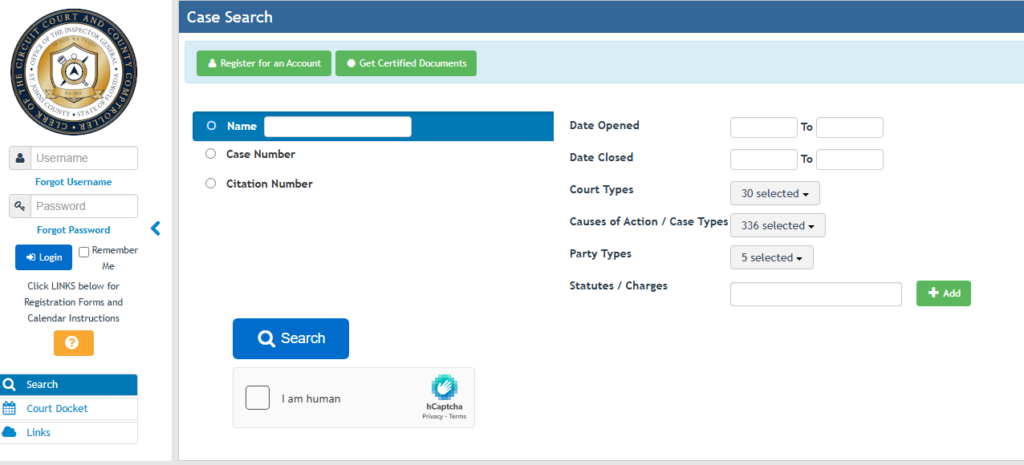
Users can begin the process by visiting the official website of the St Johns Clerk of Courts at https://stjohnsclerk.com. Once the homepage loads, they should scroll down to find the Online Services section and click on it to continue. From there, the system redirects users to available digital tools where required court information can be searched using different options. This area acts as the main entry point for the court records search system and supports both case lookup and public records access.
Process for Online Records Search
- View available docket details and case information:
- Open the official website: https://stjohnsclerk.com
- Scroll down the homepage
- Click on Online Services
- Select the required search option
- Enter case number or party name
Case Number Search and Name-Based Lookup System
The court database supports two primary search methods: case number search and name-based search. Each method serves different needs depending on the available information.
Case Number Search
A case number search provides direct retrieval of a specific file. This method is commonly used when exact details are known.
It returns:
- Case filing details
- Court dates and hearing updates
- Document history
- Final judgments or orders
Name-Based Search
A name-based system allows searches using party names involved in a case. This method is useful when case numbers are not available. It lists multiple matching records and helps narrow results by filters such as date range or case type.
Criminal vs Civil Records and Docket Information
The system separates criminal and civil records within the court records search system to maintain structured organization.
Criminal Records
Criminal case files include arrest details, charges, court hearings, and sentencing records. These are maintained under strict judicial administration authority due to sensitive legal content.
Civil Records
Civil records include disputes related to property, contracts, family matters, and financial claims. These files focus on filings, motions, and court decisions without criminal charges.
Docket Information System
The docket system provides a timeline view of each case. This structured docket view supports case tracking across all court divisions.
It shows:
- Filing dates
- Hearing schedules
- Motion submissions
- Judge decisions
Public Terminals and Record Review Options
The St Johns Clerk of Courts provides public terminal systems for in-person record review. These terminals serve users who prefer physical location-based searches instead of online tools. The system also supports printed copies upon request, depending on document eligibility rules.
Public terminals allow:
- Viewing of case files and docket summaries
- Searching records using names or case numbers
- Reviewing civil and criminal case separation data
- Checking archived court documents
Judicial Records Database and Case Tracking Structure
The st johns clerk of courts records platform operates as a unified judicial records database connected to case tracking tools. It supports continuous updates through the case status tracking system, which records each stage of a legal proceeding. This system allows consistent monitoring of legal proceedings across multiple court divisions while maintaining organized recordkeeping for public and legal use.
Key components include:
- Real-time case updates from court filings
- Organized classification of civil and criminal records
- Structured public court archive storage system
- Integrated docket management for all case types
Clerk of Court Services
The clerk of courts records search system is closely linked with a wide range of services that support court operations and legal documentation handling. The office works as a central unit for filing services, record organization, and structured processing of legal documents used across civil and criminal court systems. These services operate through a judicial filing department, which manages incoming paperwork, maintains official records, and supports case-related administrative tasks in a structured way.
Filing Services and Document Submission System
The filing services unit manages all incoming legal paperwork submitted by attorneys, government agencies, and residents. It operates through a structured document submission system that records, verifies, and routes filings to the correct court division. Every submission goes through legal paperwork processing, where documents are checked for completeness and assigned to the correct case category. This system helps maintain accuracy in case records management and ensures each document becomes part of the official judicial record.
Key filing functions include:
- Submission of petitions, motions, and complaints
- Registration of new court cases
- Processing amendments to existing case files
- Handling fee-based filing requirements
Court Case Registration and Record Services
Court case registration is one of the core responsibilities of the clerk office. Every new civil, criminal, or family matter is entered into the system and assigned a unique case number. Once registered, the case becomes part of the structured record services framework. Record services handle both active and archived case files. This includes updating case status tracking system entries, maintaining docket information, and supporting clerk of courts records search functions. Each record is stored in a way that allows structured retrieval when needed, forming part of the broader judicial records database used by the court system.
Legal Document Processing and Court Order Management
The clerk office is responsible for continuous legal document processing throughout the lifecycle of a case. This includes managing filings, updating case files, and recording all court actions. Judges’ rulings and court orders are also processed through this system and added to official records. Court orders are carefully recorded, indexed, and stored for future reference. These documents include judgments, rulings, summons, affidavits, and other legal filings. Each item is processed through the judicial filing department before being added to the official case file, ensuring accuracy in legal documentation across all divisions.
Court Order Archiving and Record Maintenance
Court order archiving is part of long-term record maintenance. The clerk office preserves completed case files and court decisions within a public court archive system. The record maintenance system ensures that both active and closed cases remain organized within the court infrastructure. This supports transparency and allows authorized users to perform case lookup online when needed.
Archiving functions include:
- Storing finalized case records
- Preserving historical court orders
- Maintaining searchable database entries
- Supporting long-term record retrieval
Administrative Services and System Coordination
Administrative services connect all operational areas of the clerk office into a unified structure. These services manage coordination between filing, record handling, and certification processes. They also support court scheduling, document flow, and internal communication across departments. The court administration office plays a central role in maintaining order within this system. It ensures that filings are processed correctly, records remain updated, and legal documents move efficiently through each stage of review and storage.
Certification Services and Legal Record Validation
Certification services provide official copies of court documents for legal use. These certified records are verified copies taken from the original court files and stamped for authenticity. This service supports attorneys, agencies, and residents who require verified court documentation for legal or administrative purposes.
Common certified documents include:
- Case summaries and docket reports
- Court judgments and orders
- Filing confirmations
- Legal record extracts
Integrated Judicial Filing Department System
All services operate within a structured judicial filing department that connects filing, records management, certification, and administrative coordination. This system supports the entire lifecycle of legal documentation, from initial submission to final archiving. By combining document submission system processes with organized record services, the clerk office maintains accurate, accessible, and well-structured court records across all divisions of the judicial system.
How to Request Court Records
Requests for court information in St Johns County are handled through a structured system managed by the clerk office. This system supports both digital and in-person record requests, allowing users to obtain case files, docket information, and certified legal documents depending on eligibility and record type. The process is designed to support consistent public records access while keeping legal documentation properly organized within the county judicial structure.
The record retrieval system works as a controlled workflow that connects case files stored in the judicial records database with user requests submitted online or at service counters. It is used for both simple case lookups and formal document certification request services. Each request is reviewed, processed, and fulfilled based on court rules, record availability, and verification requirements. This system helps maintain accuracy in court archive access while supporting transparency in legal documentation handling.
Online Request Process
Online requests provide a faster method for obtaining court-related information through the clerk’s digital platform. This system connects users directly to the court archive access tools, where case details, filings, and docket summaries can be reviewed without visiting the office in person. It is commonly used for basic record checks, case tracking, and preliminary document searches. The digital workflow is supported by a structured record retrieval system, which processes requests based on case numbers or party names. Once submitted, the system locates relevant entries within the judicial database and prepares results for viewing or downloading depending on access permissions.
Steps for online record requests:
- Visit the official clerk website
- Open the records or online services section
- Enter case details using name or case number
- Select the required record type
- Submit request for viewing or certified copy
Offline Request Process
Offline record requests are handled directly at the clerk office for users who prefer in-person assistance or require detailed support. This method is often used when case details are incomplete or when physical copies of court records are needed. Staff members assist in locating files through internal systems linked to public records access databases. The offline process is also helpful for complex or archived cases that may not appear immediately in online search tools. Requests are verified, processed, and retrieved through the court’s internal filing and storage systems.
Offline steps include:
- Visit the clerk office in person
- Request specific case file or document type
- Provide case number or party name
- Fill out a formal request form if required
- Pay applicable fees for copies or certification
Required Information for Requests
Accurate information is essential for processing record requests efficiently. The clerk office relies on complete details to locate files within the judicial records database and avoid delays in retrieval. Common required details include case number, party names, filing date range, and document type. In some cases, users may also need to specify whether they are requesting civil, criminal, probate, or family court records. Providing complete data improves search accuracy within the court archive access system and speeds up verification for document certification request handling.
Processing Time for Requests
Processing time depends on the type of request and the method used. Online searches for basic records are often completed quickly, while certified copies or archived files may require additional review time. Simple case lookups are usually available within minutes through the digital system. However, formal record requests may take longer due to verification steps, workload, or retrieval from older archives. Requests involving certification pass through additional checks to confirm document authenticity before release.
Fees for Court Records
Fees vary depending on the type of record requested and whether certification is required. Standard copy charges apply to basic document printing, while certified copies involve additional validation costs. Common fee categories include per-page copying, certification stamping, and archive retrieval charges. Mailing or delivery services may also involve extra costs depending on user preference. These fees support ongoing maintenance of the record retrieval system, ensuring court records remain organized, secure, and properly managed within the public records access structure.
| Service Type | What It Covers | Fee (Approx.) |
|---|---|---|
| Basic Record Copy | Standard court document copies | $1 per page |
| Certified Copy Request | Official stamped legal documents | $2 per document + $1 per page |
| Case Search Fee | Manual search in record system | $2–$5 per name or case |
| Archive Retrieval | Older or stored case file access | $5–$10 per file |
| Docket Printout | Case activity and hearing details | $1 per page |
| Mailing Service | Postal delivery of records | $5–$15 (based on distance/weight) |
| Online Case Viewing | Digital access to basic case info | Free (most cases) |
Court Filing Process in St Johns County
The legal document filing process in St Johns County operates through structured clerk office services that manage all court submissions. This system handles civil, criminal, and administrative filings through both in-person and electronic methods. It follows a defined court documentation process that keeps records organized within the county judicial system. The filing system works as a judicial submission workflow, where documents are reviewed, categorized, and entered into the official case records database. Each filing becomes part of the court record once accepted and processed.
Civil Case Filing Process
Civil case filings involve disputes between individuals, businesses, or organizations. These cases include property disputes, contract issues, and family-related matters. The process begins when a plaintiff submits legal paperwork to the clerk office. Documents are reviewed for completeness and assigned a case number. After acceptance, the case is entered into the system for scheduling and tracking. This workflow ensures proper organization within the judicial submission workflow system.
Key steps include:
- Submission of complaint and supporting documents
- Payment of required filing fees
- Case registration in court system
- Assignment of case number and division
Criminal Case Filing Process
Criminal case filings are initiated through law enforcement agencies or prosecutors. These cases involve charges filed against individuals for alleged violations of law. The clerk office records and processes these filings as part of the official court system. Once submitted, the case enters the criminal division for hearings and legal proceedings. This process is closely managed within the court documentation process to ensure accuracy and legal compliance.
Key stages include:
- Filing of charging documents or indictments
- Entry into criminal case records system
- Scheduling of initial court appearances
- Maintenance of case updates and docket entries
e-Filing System
The electronic filing system allows users to submit legal documents digitally instead of visiting the courthouse. This system is widely used by attorneys, law firms, and government agencies for faster processing. The e-filing platform is integrated with clerk office services to improve efficiency in handling court submissions.
It supports:
- Digital submission of legal documents
- Automated case registration
- Instant filing confirmation
- Secure storage in judicial records database
Submission Guidelines and Processing
All filings must follow specific guidelines to be accepted by the clerk office. Documents should be complete, properly formatted, and include required case details. Once submitted, documents move through the legal document filing process, where they are reviewed, recorded, and added to the official system. This ensures consistency across all clerk office services and supports structured case management within the county court system.
General submission rules include:
- Accurate case information and party names
- Required filing fees attached
- Proper document formatting based on court rules
- Selection of correct case type (civil or criminal)
Fees, Costs & Processing Time
The record request fees in St Johns County depend on document type, number of pages, and whether official certification is needed. Basic copies cost less, while certified copies request services include added verification steps because they are used for legal and official purposes. Charges also reflect document handling, case retrieval, and record maintenance within the clerk system. Older or archived files may include extra retrieval costs depending on storage requirements.
Fee Table
| Service Type | Description | Fee Range |
|---|---|---|
| Standard Record Copy | Basic court document printout | $1 per page |
| Certified Copy Request | Official stamped legal copy | $2 per document + $1 per page |
| Case Search Fee | Locating case in system | $2 – $5 per search |
| Archive Retrieval | Older case file access | $5 – $10 per file |
| Docket Printout | Case activity report | $1 per page |
| Electronic Access | Online viewing of basic records | Free |
| Mailing Service | Delivery of documents | $5 – $15 depending on distance |
Payment Methods
Payments for record request fees are accepted through multiple channels depending on how the request is submitted. All transactions are processed through verified court payment systems to maintain accuracy and record tracking.
Common options include:
- Credit or debit card payments for online submissions
- Cash payments at clerk office counters
- Money orders or cashier’s checks for official filings
- Secure online payment system for digital requests
Processing Timelines
Processing time varies based on request type and workload. Simple record lookups are completed quickly, while certified and archived requests take longer due to verification steps. This structured system supports accurate handling of all court record requests while maintaining consistency across clerk office services.
Typical timelines include:
- Online record search: immediate to same day
- Standard copies: 1–3 business days
- Certified copies request: 3–7 business days
- Archived records: depends on file age and retrieval requirements
Frequently Asked Questions
Users can complete a court records lookup through the official St Johns Clerk of Courts website. The process starts by opening the site, selecting Online Services, and entering either a case number or a party name. The system then displays available details such as docket entries, filings, and case status updates. This method is commonly used for quick and structured access to st johns clerk of courts records without visiting the courthouse. It supports users who need fast case information and helps locate civil, criminal, and family case data in one place.
What cases are available in public court records?
Public court records include a wide range of cases that form part of the county’s public court archive. These records are maintained within the judicial system and can be viewed based on access rules set by the court. Civil cases such as disputes, contracts, and property matters are included along with criminal cases involving charges and court proceedings. Family law cases and probate matters such as wills and estates are also part of the system.
How do I request certified court documents?
A certified copies request is required when official legal documents are needed for legal, personal, or administrative use. These documents carry an official stamp from the clerk office confirming authenticity. The process begins by submitting a request either online or in person. The requester must provide case details such as a case number or party names and select the document type needed.
Can I search criminal court records in St Johns County?
Criminal records are part of the st johns clerk of courts records system and can be searched using the official lookup tools. Users can enter names or case numbers to view available information linked to criminal cases. These records may include charges filed, hearing schedules, case status updates, and final court decisions. Some sensitive information may be restricted depending on legal access rules, but general case details are usually available through the court records lookup system.
What is the fee for court record copies?
Fees for court records depend on the type of document requested. Standard copies are usually charged per page, while certified copies include additional costs because they require official validation from the clerk office. Basic record copies typically cost around one dollar per page, while certified documents include both per-page charges and an additional certification fee.
Is there an online portal for case lookup?
Yes, the St Johns Clerk of Courts provides an official online portal for case searches. This system allows users to perform a court records lookup without visiting the courthouse. Through this portal, users can search civil and criminal cases, view docket information, check case status, and request certified documents when needed.