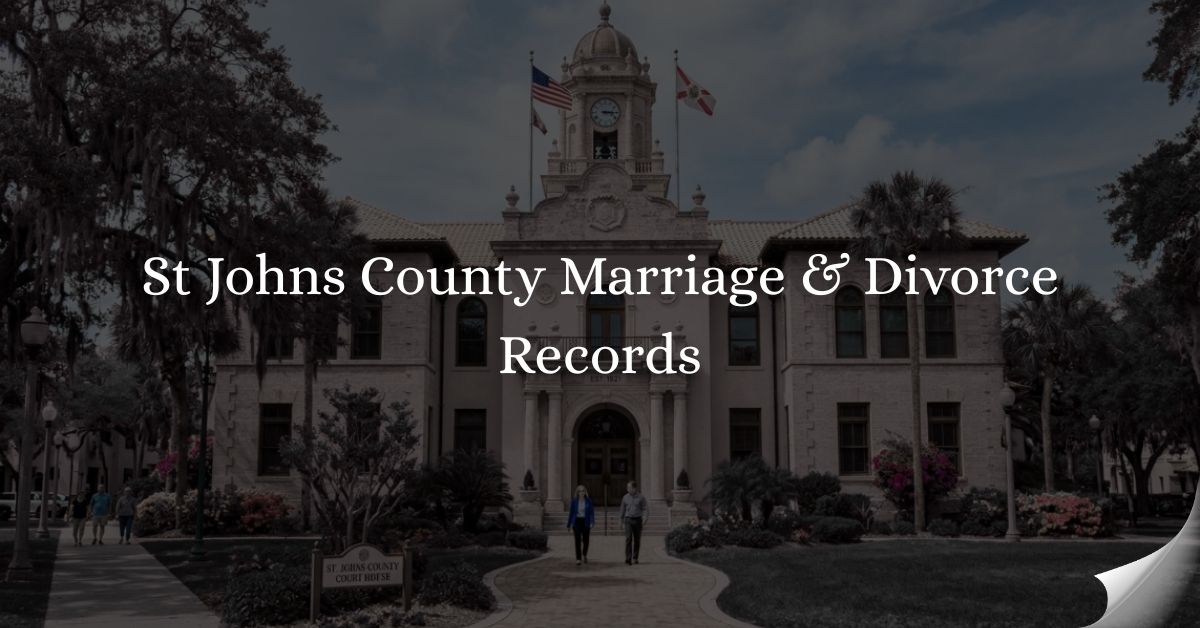
St Johns County Marriage & Divorce Records contain official information recorded through the county court system for legal marriages and divorces. These records fall under vital records and are maintained as part of family court records. They include marriage licenses, divorce decrees, and related legal filings that confirm marital status and court outcomes. Each record serves as official documentation within the public records system and reflects legally recognized events recorded by the county authority.
These records are often reviewed for personal, legal, and administrative needs. People check them for marital status confirmation, background verification, property matters, or family history research. Marriage records show union details such as names, dates, and license data, while divorce records contain court decisions, filing dates, and case outcomes. Both record types are handled within the court system and stored by the county clerk and vital records office, which manages record availability and keeps legal documentation organized for public record use.
How to Search Marriage & Divorce Records Online
Searching for marriage and divorce records online is easier today thanks to official digital systems provided by courts and government offices. Whether you are making a record request for legal use or conducting a basic court record lookup, most jurisdictions provide access through an online court database or clerk-managed system St Johns County records are commonly accessed through these platforms for public searches, certified requests, and case-related information. Understanding how these tools work will help you find accurate results quickly.
Steps for Online Search Process
To begin, you need to access the correct case search portal or public access system for the county or state where the marriage or divorce occurred. For example, records in St. Johns County are maintained by the St. Johns County Clerk of the Circuit Court and Comptroller, which provides an official records search system.
- Visit the Official Website: https://stjohnsclerk.com
Go to the clerk or court website for the relevant location. Avoid third-party sites and always use official government portals. - Open the Search Tool
Look for options like “Official Records Search,” “Court Records,” or “Case Search.” This is the actual tool connected to the online court database. - Select Record Type
Choose between marriage records (usually under official/vital records) or divorce records (under court or family case records). - Enter Search Information
You can search using:- Name Search: Enter first and last name of one or both parties. This is the most common method.
- Case Number Search: If you have a case number, this will provide the most direct and accurate result.
- Apply Filters
Narrow your results using filters such as filing date, document type, or location. This improves the quality of your court record lookup. - Review Results
After submitting your search, a list of matching records will appear. Click on a record to view details like names, dates, and case status. - Access or Request Documents
Basic information is often free, but full documents may require a formal record request or a small fee.
Using Name or Case Number
A name search is helpful when you only know the individuals involved, but it may return multiple results—especially with common names. In contrast, a case number search is more precise and leads directly to the correct file without extra filtering.
Differences in Search Accuracy
Because of these differences, it’s often necessary to try multiple search variations.
Search accuracy depends on several factors:
- Data Entry: Misspelled names or incomplete details can reduce accuracy.
- System Coverage: Not all records are fully digitized in every public access system.
- Search Method: Case number searches are highly accurate, while name searches may require refinement.
What Are Marriage Records in St Johns County?
St Johns County marriage records are official documents that confirm a legal marriage registered within the county system. These records fall under vital records and include details recorded during the marriage licensing and registration process. They serve as legal proof that a marriage took place and is recognized by the court system. These records are stored by the county clerk’s office and become part of the public record after registration is completed.
Definition of Marriage Records
Marriage records in St Johns County are created when a couple applies for a marriage license and completes the legal ceremony. Once the marriage is finalized, the license is returned to the county for official registration. Because they are part of st johns marriage records, they hold legal value for identity verification, name changes, and family documentation.
These records confirm:
- Legal union between two individuals
- Date and place of marriage
- Authorization by an officiant
- Filing within the county system
Information Included in Marriage Records
A standard marriage record or marriage certificate contains several key details that confirm the legality of the union. This data becomes part of the official vital records database managed by the county clerk.
Common information includes:
- Full names of both spouses
- Marriage date and location
- License issuance number
- Officiant name and signature
- County registration details
How Marriage Licenses Become Public Records
A marriage license is issued before the ceremony takes place. After the wedding is performed, the officiant submits the completed license back to the county. Once recorded, it becomes part of the public records system. This process turns a private application into an official county record available for verification and legal reference. The registration process ensures that all marriages are properly documented within the court system and stored for future record checks.
Certified vs Informational Copies
Marriage records can be issued in two main formats: certified copies and informational copies. A certified copy is commonly required for name changes, immigration, or legal procedures. It carries an official seal from the county clerk. An informational copy provides the same details but does not have legal validity. Both types are part of the st johns marriage records system maintained under county vital records management.
| Type | Purpose | Legal Use |
|---|---|---|
| Certified Copy | Official stamped document | Accepted for legal and government use |
| Informational Copy | Non-certified reference copy | Personal or research use only |
What is St Johns County Divorce Records?
St Johns County divorce records are official documents created when a marriage is legally ended through the family court system. These records are part of divorce case records St Johns and include court filings, final judgments, and supporting legal documents tied to the dissolution of marriage process. These records are maintained by the county court system and stored as part of official divorce filings. They serve as legal proof that a marriage has been formally dissolved by court order.
What St Johns County Divorce Records Contain
A typical divorce record in St Johns County includes several legal details generated during the court process. These records are part of the official case number file assigned by the court. These records form part of the divorce case records St Johns system and are stored as official documentation within the court archive.
Common contents include:
- Full names of both parties
- Case number assigned by the family court
- Filing date of the divorce case
- Final judgment of dissolution of marriage
- Court orders related to custody or support
- Property or financial settlement notes (if applicable)
Court Involvement in Divorce Cases
All divorce records are processed through the family court system in St Johns County. A judge reviews the case, hears arguments if required, and issues a final ruling that legally ends the marriage. Once finalized, the court issues an official order, which becomes part of the permanent divorce filings record.
The court process includes:
- Filing of divorce petition
- Court hearings (if needed)
- Review of agreements or disputes
- Final judgment of dissolution of marriage
Public Access and Record Availability
Most St Johns County divorce records are considered public records, but full access is not always open. The court system provides basic case details through public search tools, while certified copies may require a formal record request. However, detailed financial information, custody arrangements, or sealed documents may not appear in public results. These restrictions protect sensitive legal and personal data within the family court system.
Public access may include:
- Case status
- Filing date
- Names of parties
- Final judgment summary
Sensitive Information Rules
Divorce records often contain private details, so access is controlled under public records law. The county limits visibility of sensitive information even though the record itself is public. Only authorized users or certified requests can view restricted sections of divorce case records St Johns. This system helps balance public transparency with privacy protection in the family court record structure.
Common protected data includes:
- Financial account details
- Minor children information
- Confidential court exhibits
- Sealed settlement terms
How to Request Certified Copies?
Certified copies of marriage certificates and divorce filings are issued through official county record systems under a formal record request process. These documents carry legal authentication and are accepted for court, immigration, and identity verification purposes. Requests can be made through online systems, mail, or in-person service depending on convenience and document type.
Who Can Request Certified Records
Access to certified marriage and divorce records depends on the type of document and privacy rules within the county public records system. Marriage certificates are generally more open, while divorce filings may include restricted details based on court confidentiality. The county court system follows identity checks before releasing certified copies to confirm lawful request status.
Common eligible requestors include:
- Either spouse named on the record
- Legal representatives with authorization
- Immediate family members in certain cases
- Government agencies for official use
Required Documents for Record Request
A valid application form is required to initiate a certified copy request. The form collects basic details such as names, dates, and record type to locate the correct entry in the database. For divorce filings, additional case details may be requested to confirm accuracy in the family court records system.
Typical requirements include:
- Completed record request application form
- Valid government-issued ID for identity verification
- Full names of parties involved in marriage or divorce
- Approximate date of event or case number (if available)
- Payment for certified copy fee
Fees and Processing Time
Certified copies are not free and require payment based on county fee schedules. The certified copy fee varies depending on document type and number of copies requested. Delays may occur when records require manual verification within the court record lookup system.
Common fee structure:
- Marriage certificate copy: fixed per page or per document
- Divorce filings: charged per page or per certified packet
- Additional charges for extra certified stamps or copies
Processing time depends on request method:
- Online requests: faster processing, often same-day or a few days
- Mail requests: longer due to delivery time
- In-person requests: usually fastest for immediate pickup
In-Person, Mail, and Online Request Options
Certified copies of marriage certificates and divorce filings can be requested through three main methods. Each option follows the same verification process but differs in speed and convenience.
In-Person Request
Requests are submitted directly at the county clerk office. Identity verification is completed on-site, and copies are often issued the same day.
Mail Request
An application form, ID copy, and payment are mailed to the records office. Processing takes longer due to postal handling and verification steps.
Online Request
The online court database allows digital submission of a record request. Users upload details, complete identity checks, and pay fees electronically. Certified copies are then delivered by mail or digital download, depending on system options.
Public Access Rules & Privacy Restrictions
St Johns County vital records are part of the public system, but not all information is open for viewing. A public records search allows people to view many marriage and divorce filings, yet some documents fall under restricted categories due to privacy controls and legal rules. Public access depends on the type of record, court status, and privacy laws linked to family court matters. Some details remain visible, while sensitive information stays limited to protect personal rights.
Public vs Restricted Records
In the county system, public records search tools show basic information from marriage and divorce filings. These may include names, filing dates, and case numbers. Public records are available through official databases, but restricted content requires legal permission or court approval.
However, restricted records are not fully visible. These often involve:
- Sensitive financial details
- Child custody information
- Confidential settlement terms
- Court-protected personal data
Sealed Divorce Cases
Some divorce cases are marked as sealed records, meaning they cannot be viewed through public systems. A sealed file is removed from general search results in the vital records database. In these cases, even a public records search will not display full case details. Only authorized parties, such as attorneys or court officials, may view sealed information.
Sealing usually happens when:
- Court orders privacy protection
- Domestic safety concerns exist
- Sensitive family issues are involved
- Minor children require confidentiality
Privacy Protection Laws
Privacy rules control how vital records are shared in public systems. These laws balance transparency with personal security in family court matters. These laws ensure that public records search systems provide useful information without exposing private or harmful details. The court system maintains this balance to protect individuals while still offering access to lawful public documents.
Key protections include:
- Limiting access to sensitive divorce case details
- Protecting personal identifiers in family disputes
- Restricting sealed record visibility
- Allowing partial public access only
Fees, Processing Time & Availability
Record request fees and processing times vary based on document type and whether certified copies are needed. Court clerk offices apply fixed charges for searching, copying, and certification of records. Processing time depends on record age, workload, and document type.
Fee Breakdown for Record Request and Certified Copies
Court charges for a record request depend on the type of service involved. A basic search fee is applied when the court clerk locates a case file, and additional costs apply for copies and certification. Certified copies cost more since they include official verification from the court clerk.
Fee Table
Certified copies often cost more than standard copies because they require validation and official sealing. Larger case files may increase the total cost due to higher page counts.
| Service Type | Typical Cost Range |
|---|---|
| Record search fee | $5 – $15 |
| Copy charges (per page) | $0.50 – $1.00 |
| Certified copy fee | $2 – $5 per document |
| Archive retrieval charge | $10 – $25 |
| Rush processing fee | $10 – $50 (if available) |
Processing Time and Service Delays
Standard record requests are usually completed within 2 to 5 business days once received by the court clerk office. Requests for certified copies may take 3 to 7 business days since verification steps are required. Older or archived files can take up to 10 to 14 days, especially when records are stored off-site. Delays may occur when request volume is high or when case details are incomplete. Accurate information at the time of submission helps reduce waiting time.
Expedited Options and Record Availability
Some court offices offer faster processing for urgent matters. Priority handling may shorten turnaround time, but it often comes with extra service charges. Availability of records depends on case type, retention rules, and legal restrictions. Certain sealed or confidential files cannot be released without proper authorization from the court system.
Frequently Asked Questions
Court record searches often raise common questions about marriage, divorce, and family court files in St Johns County. The answers below explain how record request procedures work, what is public, and where documents are issued. This section helps users understand court record access in a simple and practical way.
How do I find St Johns County marriage records?
Marriage records in St Johns County are usually requested through the official county records office or court clerk system. A record request is required, and basic details such as full names and approximate marriage date help locate the file faster. Older records may be stored in archives, so processing time can vary. Certified copies are available for legal use and include official court verification. Many users request these records for legal proof, genealogy research, or name verification purposes.
Are divorce records public in St Johns County?
Most divorce records are considered public court records in St Johns County. This means basic case information can usually be viewed through the court clerk system. However, sensitive details such as financial disclosures or child-related information may be restricted. Public access depends on court rules and case type, so some sections of a file may be redacted or limited.
Can I get a copy of a divorce decree online?
A copy of a divorce decree can often be requested through the court clerk’s online system or in-person service. A record request form is required, along with case details such as names and case number if available. Certified copies are typically issued for legal purposes and may require payment of service fees. Processing time depends on workload, but most requests are completed within a few business days. Older divorce decrees may take longer if stored in physical archives.
What office handles marriage certificates?
Marriage certificates in St Johns County are handled by the county clerk or official records division. This office manages issuance of certified copies, maintains marriage filings, and processes public requests. Applicants can submit a request for certified copies for legal or personal use. Identification and basic marriage details are usually required to complete the request. Fees apply for certified documentation.
How long does it take to receive records?
Processing time for court records depends on the type of request and record age. Standard record requests are usually completed within 2 to 5 business days. Certified copies may take 3 to 7 business days due to verification steps by the court clerk. Archived or older records can take up to two weeks if files are stored off-site. Delays may occur during high-volume periods or when incomplete details are submitted with the request.
Can anyone access family court records?
Family court records in St Johns County are partially public, but access is limited for sensitive matters. Basic case information may be available through the court system, but restricted details are protected. Cases involving minors, custody, or sealed rulings often have limited visibility. In such cases, only authorized individuals or parties directly involved in the case can request full records through proper legal channels.